


This story has been created together with Melissa Lee, who has kindly agreed to working together. Do make sure to give her a visit over at the wonderful Notes from Nature blog. Originally in two parts, we’ve condensed the information in this one only, but we’ll be working on another story, so keep an eye out.
Perching on the side of a roof, next to Saint Paul’s Cathedral, is probably one of the last places where you would expect to see the world’s fastest bird. Yet cities like London, Oxford or Manchester have been home to peregrine falcons for years.
With abundant food sources and shelter, some wildlife has found living with us quite beneficial, even though we have reduced their natural environments, and made it more difficult for them.
For millennia, our existence has been interlinked with nature. Although industrialisation and constant technology growth is trying to push this concept away, we cannot, and should not, deny this.
Down from our waterways, and up to the roofs of our buildings, from huge cities to the small towns of the countryside, nature has adapted in such way that has also enabled new connections with us. It is absolutely incredible to look at the animals that choose to live in cities, and how they have managed to adjust to our man made environments.
If we take some time to pay attention, we’d be surprised by the number of species that we have around us. In this story, however, we will focus on birds only.
Residents
As winter comes and food gets scarcer, most birds choose to migrate, taking a break from our cold weather for a few months. Yet, even though the conditions are harder, some still remain.
Ever present around us and seldom appreciated, the birds that choose to live with us have adapted to take advantage of higher temperatures, more food, shelter - protecting them from both cold and predators, as their natural environments are diminishing due to our continuous expansion.
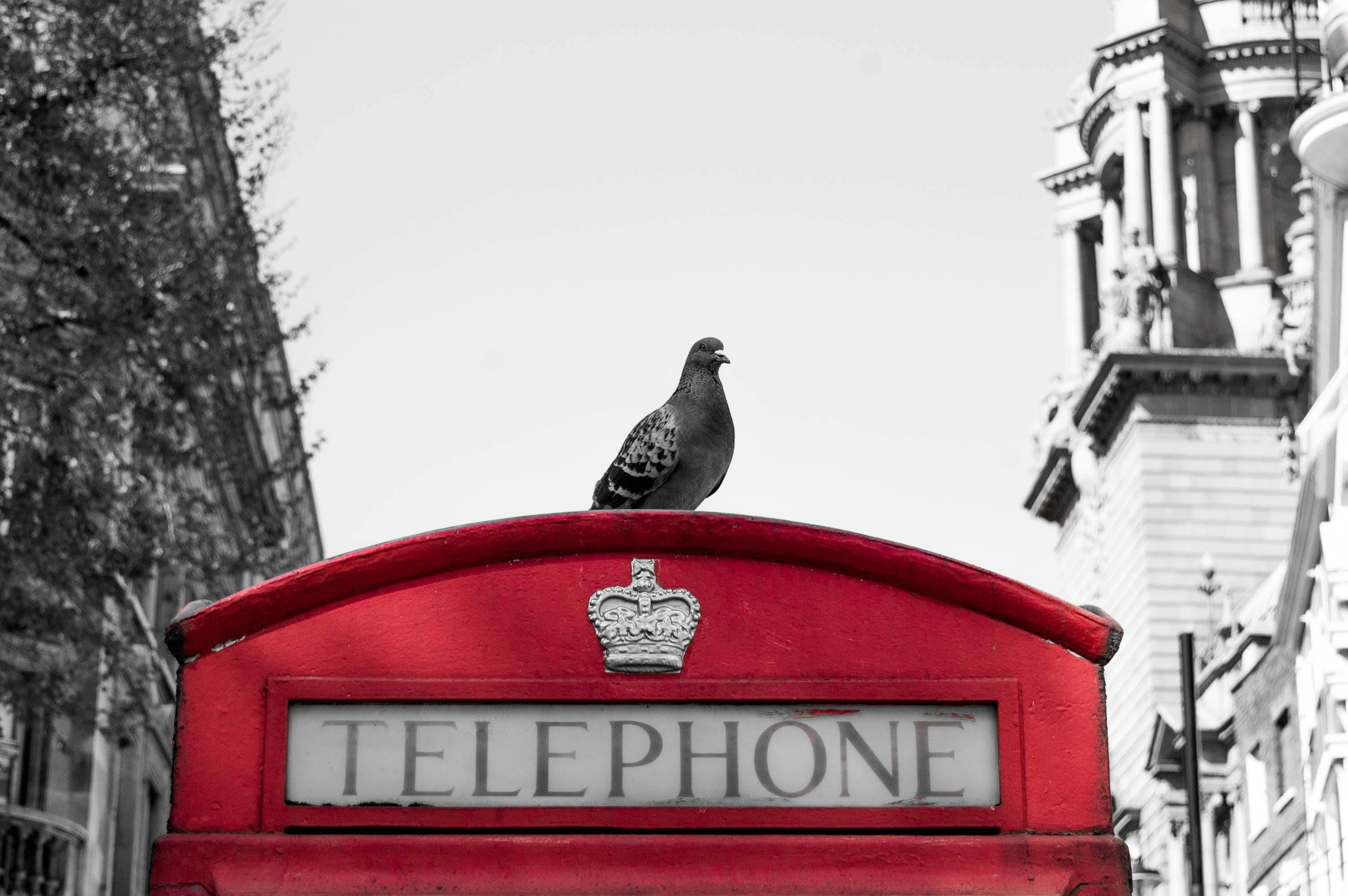
I think the most emblematic bird that can be found in any city or town is the pigeon.
Having adapted to use our buildings as cliffs, and feed from our food waste, they feel just as home in urban settings as they would in the wild.
They have become so accustomed to our presence, that we barely bother them anymore. So often are they on the ground, and wouldn’t even move as people try to get through. It always amuses me to see that.
They are nesting close to us, and if you have ever lived on the last floor in a city, you’d be most aware of their calls, particularly when nesting.
The next time you see a pigeon, consider that you’re observing one of nature’s most successful urban adapters—a bird with cognitive abilities that continue to amaze researchers, navigation skills that surpass our best technology, and an evolutionary success story that spans millennia of partnership with humans.
from Skylar, of The Peopled Seas
Furthermore, pigeons serve important ecological functions. They help control insect populations, and serve as prey for urban raptors like peregrine falcons. Their presence actually indicates a healthy urban ecosystem capable of supporting diverse wildlife.
Even though the environment is not natural - the relationship of these two species has continued to exist, and, in some places, thrive.
Ecologists confirm that the reason the peregrine falcon is doing so well is thanks to the pigeon. A total of almost 2000 breeding pairs were estimated across the UK by the British Trust for Ornithology. Even more impressive, the survey found that peregrine falcons were faring much better in urban and coastal situations than in the hills, thanks to the food abundance, which in this case is the pigeon.
Although we might not see too much of a similarity between a cliff and a building, the peregrine falcons are oblivious to the intended human purposes of the latter. There are even wildlife cams available for different nesting sites in different cities.
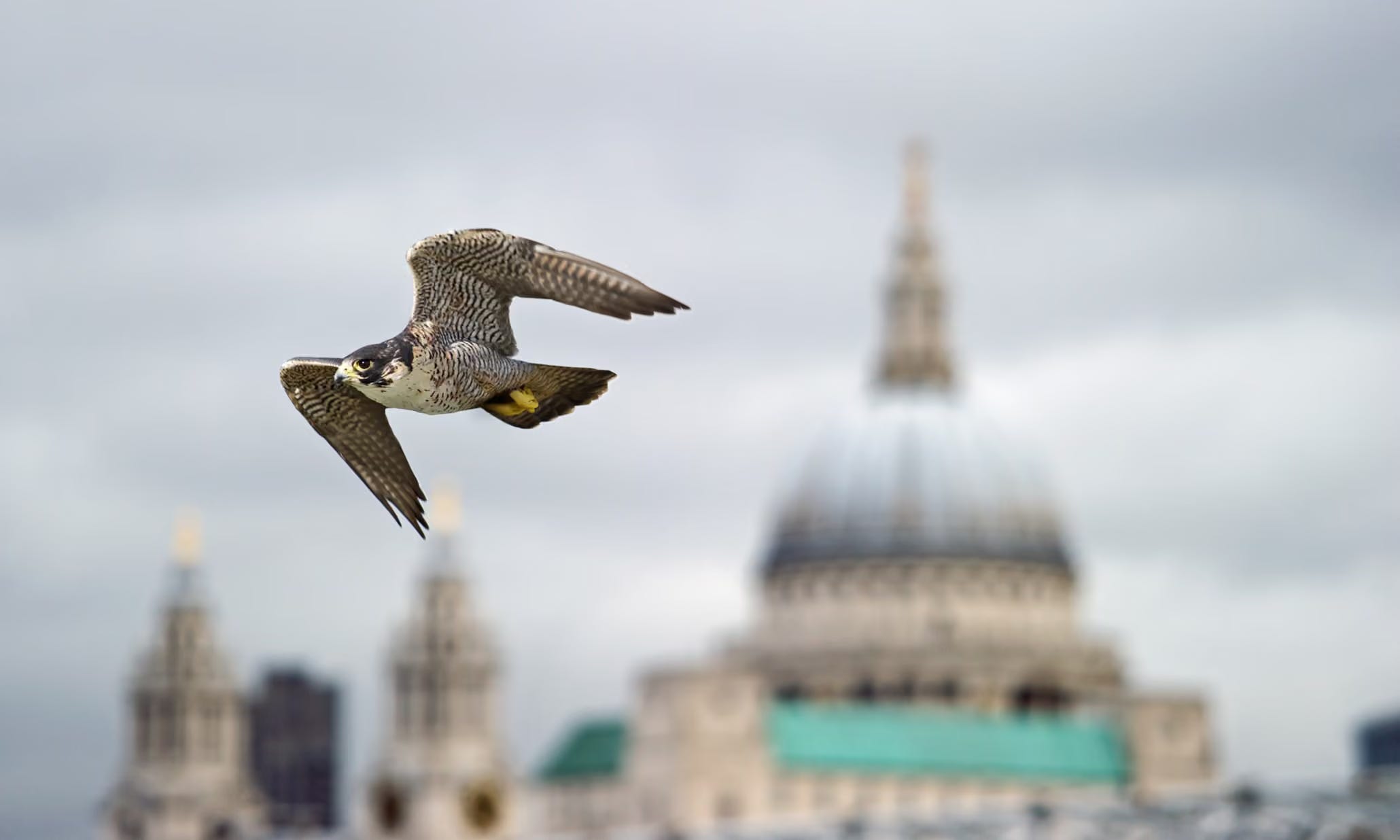
Pigeons and peregrines have evolved alongside each other, and it’s absolutely amazing to see their relationship continue in our man made cities.
Much smaller in size, but a noisy and gregarious bird, the house sparrow is a regular in towns and gardens, taking advantage of our scraps and crumbs. The house sparrow is so successful that it has managed to colonise most of the world.
In urban areas, house sparrows can often be seen opportunistically feeding on scraps and rubbish, as well as visiting bird tables and feeders. In rural areas, flocks feed on fields of grain, using their chunky beaks to crack open seeds.
Sometimes, they’re seen sharing their lunch (or rather, fighting for it) with tits, particularly great or blue tits. Not only is their song beneficial for our mental health, but they’re also important in controlling insects populations - providing us a great service, especially during summer. Instead of using insecticides around our garden, we should try to attract more birds.
The robin, voted Britain’s national bird, is a symbol of winter. While in nature they’d follow larger mammals such as boars, and collect the worms left behind whilst they’d dig for food, they adapted to our environment, doing the same with gardeners - even earning the nickname of “the gardener’s friend.”
If your city is blessed with a water body, be it a lake, a pond, a river or even channels, you’ll most likely get to see ducks, geese and swans. One such place is Milton Keynes, which is home to more swans than most towns in the UK.
These graceful birds are an indicator of healthy water ecosystems. Their presence on lakes, canals, and rivers shows that these habitats can support larger species and, in turn, many other forms of wildlife. They also hold a special place in various cultures, often symbolising beauty, grace, and love and they appear in European folklore and heraldry.
Visitors
Despite their journeys being full of danger, billions of migratory birds make their pilgrimage across the globe twice a year. Helping to disperse seeds, provide natural pest control, pollinate and transport nutrients – the arrival of these birds is often celebrated. The swallow, for example, is widely considered a sign of renewal and hope. In some parts of the world, having a swallow nest in your house is considered good luck.
Although our urban environments have increased some of the threats to these birds, by introducing pollution, power lines, shiny glass buildings and bright lights to their already perilous journeys - urban areas also provide numerous nesting opportunities. House martins, swallows and swifts seek cavities, eaves or holes in buildings – plenty of which can be found in urban environments.
One of my favourite summer visitors to our garden are the swallows. I have noticed an increase in these spectacular acrobats over the recent years – and am grateful that they have chosen to build nests in our open garage. It’s worth parking our car on the driveway for a few months of the year, to witness these impressive birds swooping into their nests at speed to feed their hungry young. Last year I was lucky enough to witness the birds leaving the nest.
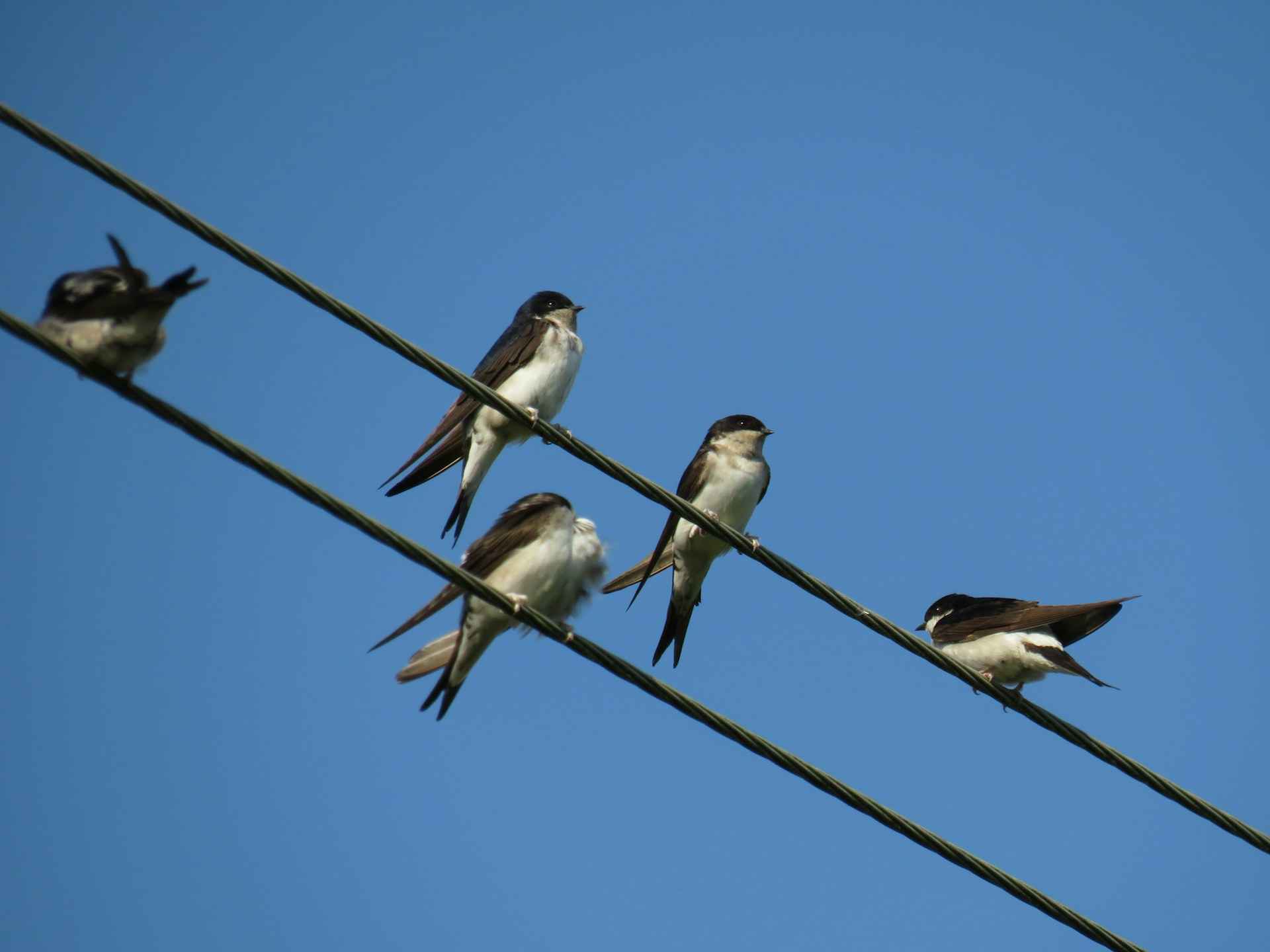
We suffer from an abundance of mosquitoes and other biting insects here in the summer, and I’ve noticed a decrease in bites since the swallows have decided to breed here. This is one great reason to put up a swallow, swift or house martin box on your property to help support these amazing birds.
Swallows prefer a horizontal beam or ledge tucked away within an outhouse or barn – with a clear flight path in and out. Therefore, they tend to be more likely to breed in open pasture or under bridges. House martins on the other hand build closed cup nests high under eaves and are much more likely to choose an urban location. As they are on the UK Conservation Red List, now could be a perfect time to consider putting up a purpose-built nest box on your house. Who knows? It might even bring you a little good fortune.
If you have space in your garden – try creating a mud patch which you keep watered. This will provide nest builders with material. Swallows and house martins are clever little architects, making their nests from mud and straw. If you are lucky enough to have them nest near you, you can enjoy watching their aerial acrobatics as they catch insects on the wing and don’t even stop to take a drink, simply skimming the surface of the water to take a drink as they pass.
It wouldn’t be spring in our garden without the distinctive call of the chiffchaff – named so for its song. These birds are often one of the first migrant birds to start singing in the spring, often from the end of February.
Chiffchaffs are sweet little birds that can often be seen taking advantage of spiders’ webs in the corner of windows - which provide a concentrated source of their preferred food - insects and spiders.
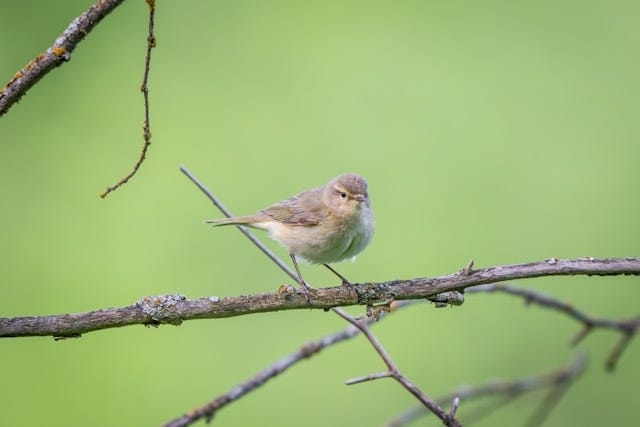
It may sometimes seem that we are more disconnected from nature, thanks to the digital age we inhabit. This is why I found it incredibly heartwarming to come across this beautiful story from the Yorkshire Post, describing how three school pupils rescued a trio of young chiffchaffs and nursed them back to life. The girls spent nine days hand rearing the birds, feeding them every half hour and even trained them how to perch by setting up branches in their bathtub. It fills me with hope to know that there are others out there who are willing to give so much care to our birds.
Migratory birds are also increasingly relying on trees in our urban spaces. They use them as ‘pit stops’ to rest and refuel along their migration routes. In the UK for example, bramblings, redwings, chiffchaffs and wagtails have been seen in places such as supermarket car parks and residential gardens where trees are planted.
Redwings and fieldfares that arrive in Northern European cities during the autumn like to feed on urban berries, from trees such as rowan and hawthorn or shrubs like pyracantha and cotoneaster.
This shows that even just a few trees and shrubs can be helpful. Parks don’t have to be large to provide benefits. If you have a few hours to spare, why not consider getting involved with a tree planting scheme in your area. In the UK, the organisation Trees for Cities are planting thousands of urban trees each year ‘creating greener, happier and healthier places to live’.
Urban waterways also act as crucial ‘service stations’ along the migratory route for many birds, such as ducks, geese, gulls and swans. Spotted flycatchers can use rivers, canals and wetlands as a productive hunting ground, catching flying insects from overhanging branches. And several warbler species nest in vegetation along canals and riverbanks before migrating to Africa for the winter.
White storks have been part of our folklore for millennia. They have been seen as a symbol of hope and new life, and in European folklore they are thought to be the ones delivering newborns. In some places, it is considered a sin to break a nest - and a blessing to have one near you.
Especially in the countryside, they love nesting between people: or tall cement poles, on rooftops or chimneys. They especially like hunting frogs or snakes in the open field, and can be seen in groups especially when the farmers start plowing the fields.
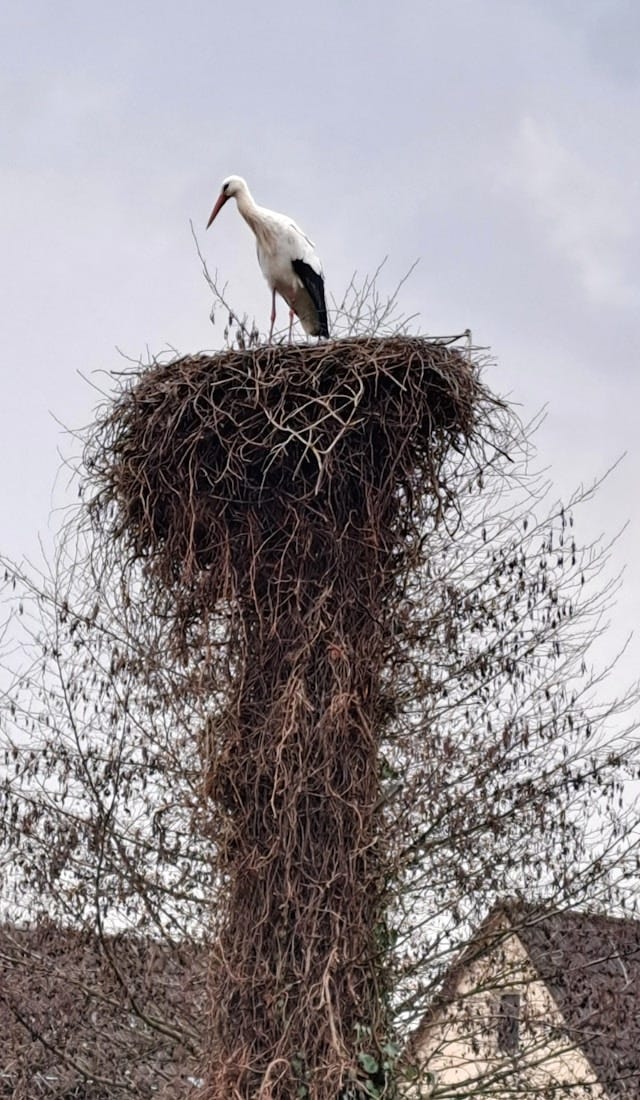
Later edit: it appears that white storks are coming back to London!
Helping
The more aware we are of the wonderful birds that we share our towns and cities with, the more likely we are to take steps to support them. From planting more trees, choosing native shrubs and flowers for your garden and avoiding the use of pesticides and chemicals – every single one of us can do our part.
Here are a few things you can do to support birds in your area:
Plant native species in your garden and remove invasive plants that can poison birds and/or compete with native plants.
Try growing wildflowers – even if you only have a patio or balcony – consider planting native wildflower seeds in pots. They look pretty and help to provide food for the birds.
Dim lights at night. Consider lights with motion sensors rather than leaving on lights permanently.
Make windows visible. Try dulling the reflection on glass and place objects on windows to help avoid airstrikes.
Avoid using pesticides and chemicals. This will help to increase the number of insects that birds depend on for their survival.
Try to reduce plastic waste. Plastic can kill birds through ingestion and strangulation. Consider reuseable shopping bags, avoid single-use plastics, and try purchasing non-plastic toys and decorations.
Put up nest boxes. Be sure to follow guidelines as to where to locate them to improve your chance of success.
If you have a barn or outbuilding, you could leave the door or half door open for the summer – allowing birds to fly in and make a nest site.
If you have a lawn, consider not cutting the entire lawn and leaving patches to grow over the spring and summer.
Get involved with tree planting projects – creating new areas of woodland and food sources – or consider supporting other conservation projects or charities in your area.
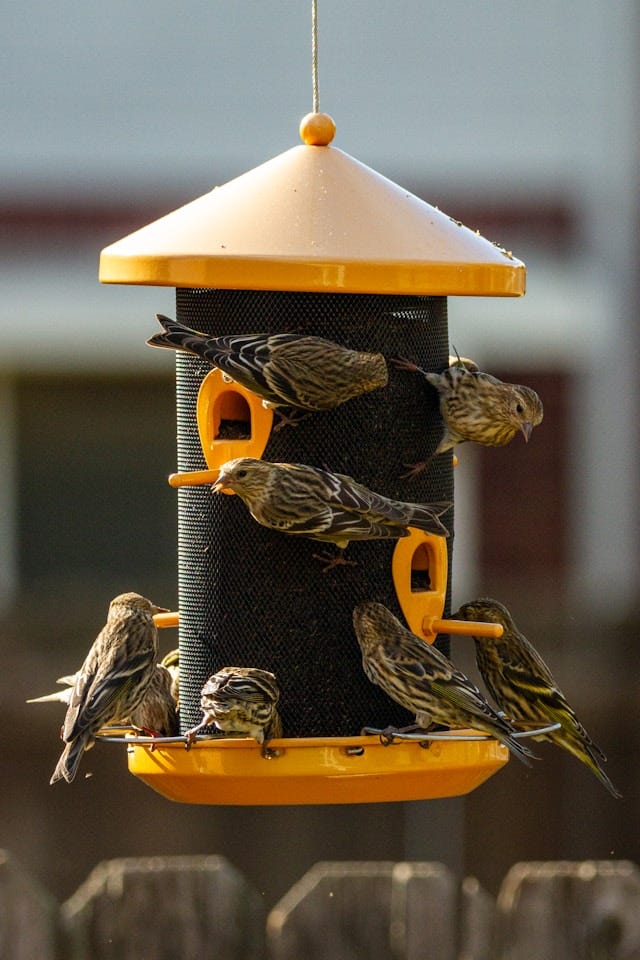
Even though they can live perfectly fine alongside us, their numbers, overall, are dwindling. If you’re in Britain and would like to help, you can provide vital monitoring through: Breeding Bird Survey, Garden BirdWatch and Garden Bird Feeding Survey.
Surely, we should strive to make our cities more inviting for nature. Not only will this bring more wildlife, but it will also improve our health.
Research has shown that residents of neighbourhoods with a high abundance of birds suffer less from depression and stress. A recent post by Kate Howlett breaks down some of the research showing how living in greener areas leads to a lower risk of depression.
What better reason to plant more trees?
Conclusion
As all these myths and folk stories are proving, birds have always played an important role for humanity, through traditions and beliefs. They have provided inspiration for a lot of our technologies, that we take for granted everyday.
We need to continue to recognise that we are part of nature, and not apart from it.
As Sir David Attenborough has so eloquently put it, “viewing ourselves as somehow separate from nature is a sure way to set ourselves up to fail.”
Let’s embrace it, nurture it, and be the stewards that we ought to be.
Resources:
[2] Ways to help birds in towns and cities
[3] Peregrine falcons and their city success
[4] Urban trees and migratory birds
[7] Urban wildlife
On a related topic, White storks are returning to London!
https://www.theguardian.com/environment/2025/dec/08/white-storks-return-london-barking-and-dagenham-2026-rewilding
Thanks for this post, beautifully written! Birds are indeed a blessing. From my apartment in Rimini, Italy, I see pigeons daily. And also magpies, turtle doves, seagulls and starlings with their fantastic murmurations against a red sunset on the hills.
I write children books about birds and this December I post each day some curiosities about a bird I have drawn in one of my books.
If you are curious, visit my profile. Thanks for sharing these interesting facts! ♥️🐧