

As the world is getting ready for summer, the Daisy is already up for a while now, with its beautiful white flowers, spread throughout the fields of green.
Having been up for most of the Spring, it provided a beautiful blanket of delicate white flowers, since the first bulbs were waking up, and the snow was still melting.
This year, particularly after this long and hard winter, I appreciated the Daisy’s presence even more, as the trees were barely catching up with their start of the year.
Linked to the Spring Equinox, daisies signal that brighter days are coming. An old proverb says that ‘it is not spring until you can plant your foot upon twelve daisies’, though different regions have a lower threshold of nine. Whilst it’s a simple and common flower, it’s forever present in poetry, art, literature, folklore and history.1
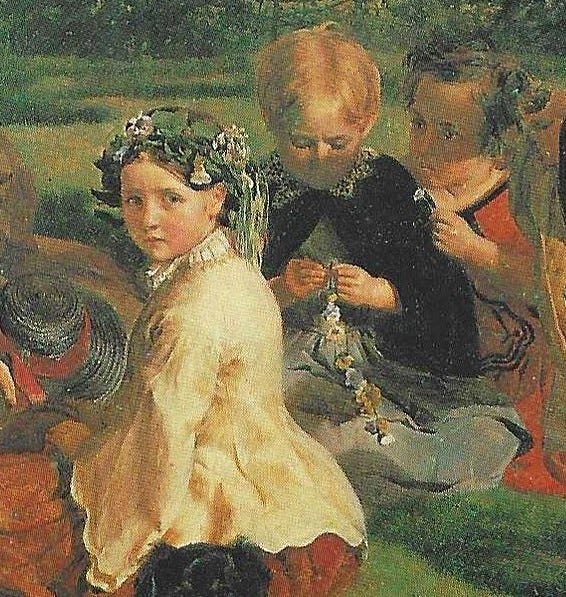
Standing as proof for its appreciation, its Latin name, ‘Bellis Perennis’, could be translated to forever beauty, as ‘Bellis’ stands for beauty, and ‘Perennis’ translates to living forever. Deservingly so.
In English, the name ‘daisy’ is believed to come from ‘day’s eye’, or the ‘eye of the day’, since the flowers open according to daylight. They stay closed during the night, and when first ray of sunshine touches them, they open to fully embrace the new day.
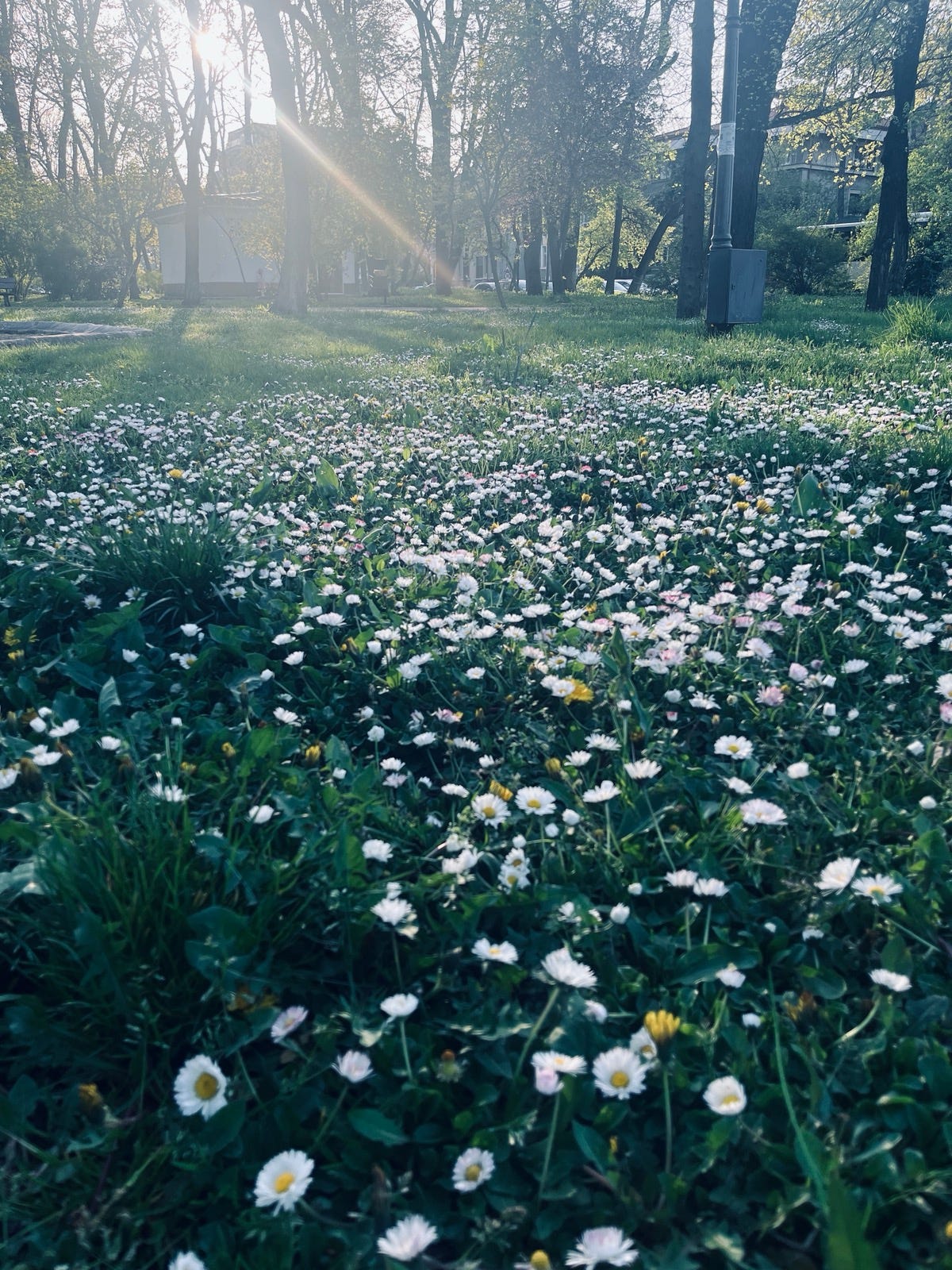
Throughout history, the daisy played many roles, including a medicinal plant. John Gerard, author of one of the first English herbals, wrote, “The leaves stamped take away bruises and swellings… whereupon it was called in old time Bruisewort. The juice of leaves and rootes snift up into the nostrils purgeth the head mightilie, and helpeth the Megrim.”
Even today, in some parts of the British countryside, it’s referred to as ‘the gardener’s friend’, as farmers are rubbing it on their lower back to soothe their pain.
Although I was aware of some of the folklore surrounding the daisy, I was pleased to discover much more meanings behind this beloved wildflower that seems to have been woven into folklore forever.
In Norse mythology, daisies are sacred to Freya, the goddess of love, beauty, and fertility. Because of this association, daisies became a traditional gift for new mothers, representing birth, new beginnings, and maternal love. Their connection to Freya also made them a symbol of romantic devotion and loyalty.
The Daisy is also a warrior’s plant, despite its size. It was given to soldiers as a good luck charm, for the protection of Freya in her fighting form. Its protection extends especially to warriors who are women, as these come under Freya’s dominion rather than Odin’s.2
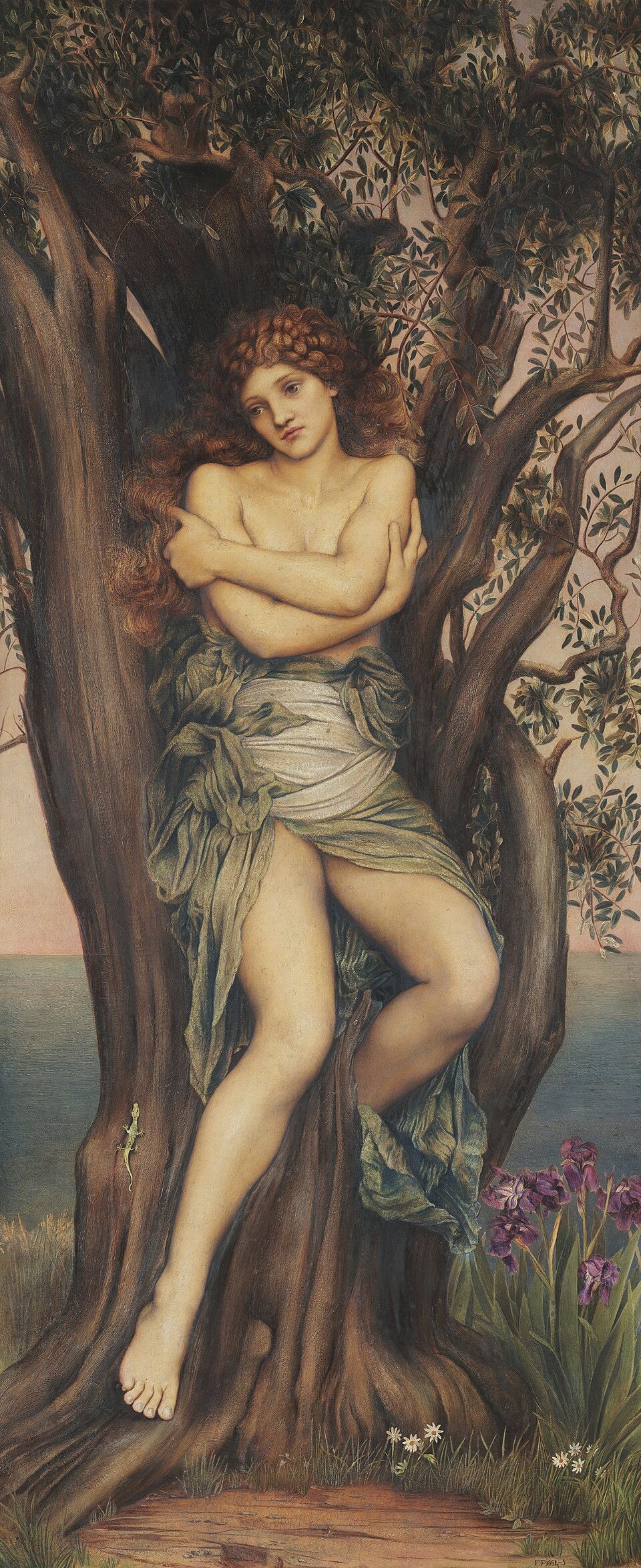
In Roman times, it was primarily known as the symbol of childhood innocence. This charming wildflower is said to originate from a Dryad, who presided over woodlands, meadows, and pastures. It is said that daisies are linked to the story of Bellis, a graceful nymph who captured the attention of Vertumnus, the god of orchards and seasons. As she danced in the fields, Vertumnus became enamoured with her, but she did not return his affections. To escape his pursuit, she pleaded with the gods, who transformed her into a daisy.3

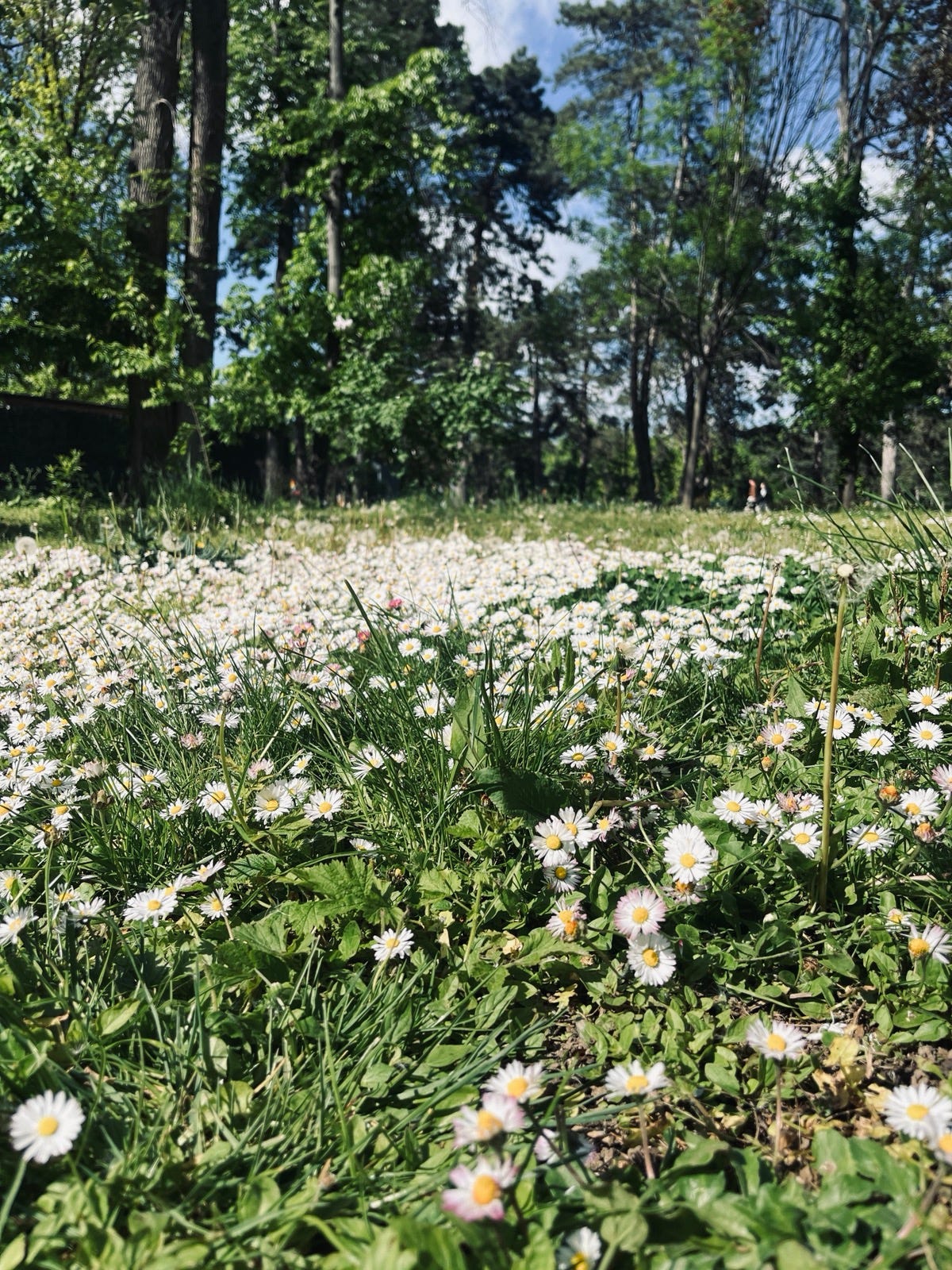
Described by William Wordsworth as ‘bright flowers whose home is everywhere’, the daisies are an important early source of nectar, as they keep flowering from early spring and well into its end, and they’re being witness to the dawn chorus every day.
Their connection with humanity grows deeper still. For centuries, children have been using them to make daisy chains, that would protect them from being abducted by fairies. Another popular game that the daisy has been used for is the ‘loves me, loves me not’ - where you’d pluck the petals one by one.
For the parks that choose to honour it, it provides a beautiful, low maintenance splash of colour in the vast green, and a great way to help wildlife.4
Whether seen as the modest bloom of a transformed nymph, a symbol of a mother’s love, or a whisper of the fairy world, daisies have enchanted our hearts for centuries. They remind us of purity, endurance, and the gentle magic found in nature.
I believe it is such a special little flower, and judging by its many different names, humanity adorned it for millennia.
Do you have a favourite legend about daisies? I’d love to hear from you.
Mexican fleabane (Erigeron karvinskianus thrives in the dry stone walls where I live by the sea x
Wonderfull! The good, old, and common daisy. Love the Wordsworth definition, the bright flowers whose home is everywhere. We somehow never had daisies in our garden, but they've recently started showing up here and there. I hope they are here to stay. And in Dutch, the common daisy is called 'madeliefje', which could be traced back to two different meanings. Either a 'lovely flower of the meadow' or the 'virgin flower of the meadow', which then would be a connotation to the Virgin Mary.